When you're planning a new brick wall, fence, column, or facade, one question that comes up early is the pattern. Running bond, Flemish bond, stack bond — the terms get thrown around and it's not always obvious what they mean or why it matters. It matters more than just looks. Some patterns are structurally stronger. Some are better suited to veneers. And some require a lot more skill to lay cleanly. Here's a straightforward guide.
Running bond: the workhorse
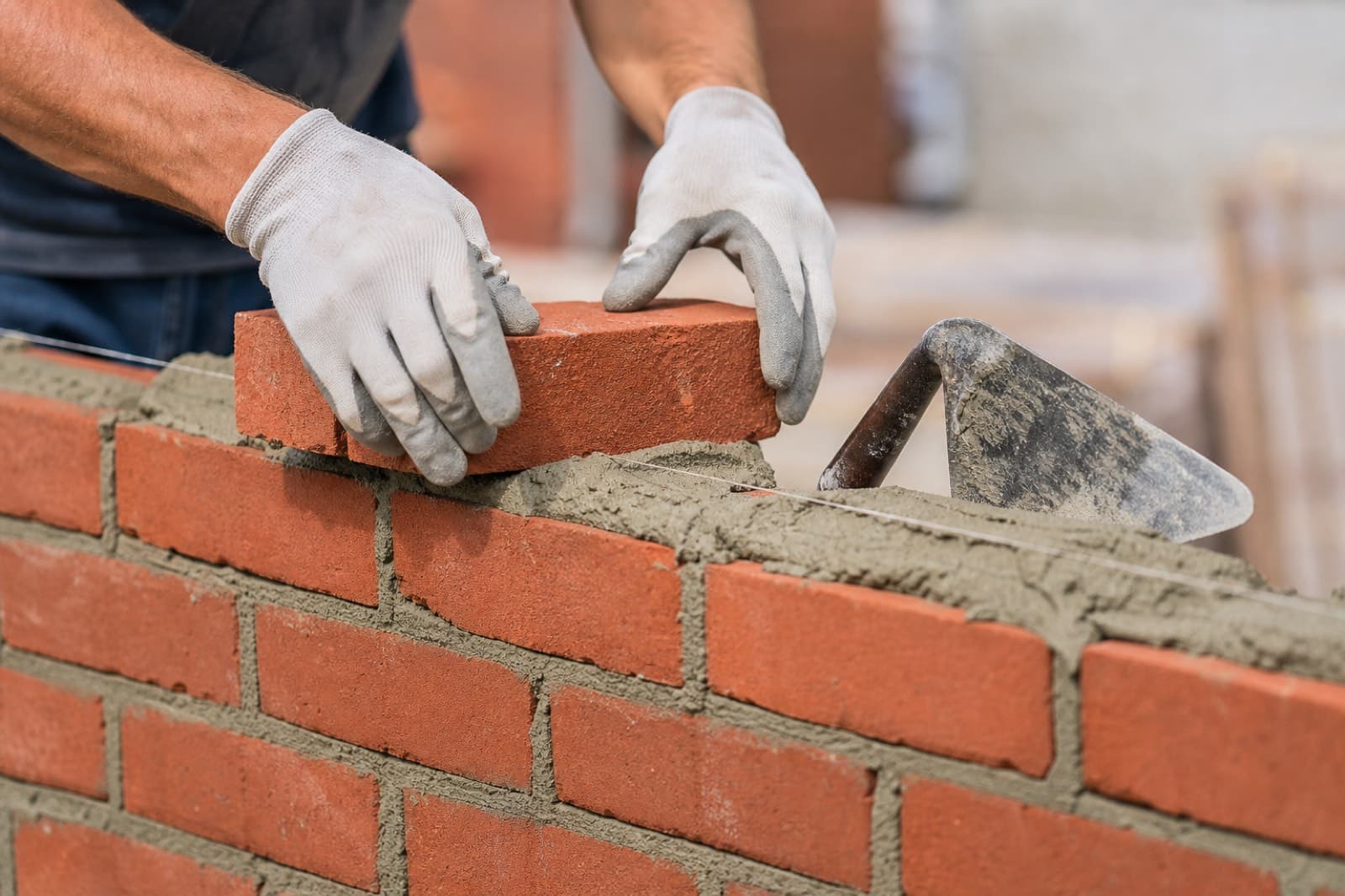
Running bond is the most common brick pattern in North America, and for good reason. Each course of brick is offset by half a brick from the one below — the classic staggered look you picture when you think 'brick wall.' The offset means every vertical joint is covered by a brick above it, which is where the structural strength comes from.
Running bond is fast to lay, strong, and looks clean on almost any application. It's what most garden walls, facades, and feature walls use. When in doubt, running bond is the right choice and it's what every competent mason knows cold.
Flemish bond: the heritage look
Flemish bond alternates headers (bricks laid with the short end facing out) and stretchers (the long end facing out) in every course. The pattern creates a distinctive, intricate look that you see on older British-influenced buildings — and a lot of heritage homes in New Westminster, Vancouver, and Victoria.
It's structurally very strong in a solid (double-wythe) brick wall, because the headers tie the inner and outer layers together. For single-wythe veneers it's usually decorative rather than structural, but it still looks sharp. The catch: it takes more skill to lay consistently and runs slightly more material per square metre because of the header bricks.
English bond: alternating courses
English bond alternates entire courses of stretchers with entire courses of headers. It's one of the strongest bonding patterns for solid walls, which is why it was used heavily in industrial and heritage construction. Aesthetically it's more regular than Flemish bond but less common on residential facades today.
You'll see it on older heritage structures and period restorations. If you're doing heritage restoration work and the original wall was English bond, matching it correctly matters for both authenticity and structural continuity.
Stack bond: all look, no structural strength
Stack bond lines all the vertical joints up in a continuous line, giving a very modern, graphic look. You see it on feature walls, interior veneers, and contemporary residential facades. It looks intentional and sharp.
The trade-off is that stack bond provides essentially no structural strength from bonding — all those aligned vertical joints are a path for cracking. It's only used where the structure behind the brick is doing the actual work (like a concrete block backup wall), or on interior applications where loads are not a concern. A freestanding stack bond wall would fall apart. Never use it for anything structural.
Herringbone and basketweave: for paving and feature work
Herringbone (bricks laid at 45 degrees in a zigzag) and basketweave (pairs of bricks alternating horizontal and vertical) are used primarily for brick paving — patios, walkways, driveways — and occasionally for decorative accent panels in walls.
Herringbone is actually one of the best patterns for a paved surface under traffic because the interlocking angles resist lateral movement better than a standard running bond. Basketweave is mostly decorative. Both take more time to lay and cut than a straight running bond.
Which pattern is right for your project?
For most new residential brickwork — walls, facades, columns — running bond is the right answer. It's strong, clean, and every mason knows it. For heritage restoration, match the original pattern; changing it is both incorrect and usually obvious.
If you want a specific look (Flemish for a traditional feel, stack bond for a contemporary feature wall), talk to your mason about it early. Some patterns require more material, more cuts, and more time, which affects the quote. Know that going in.