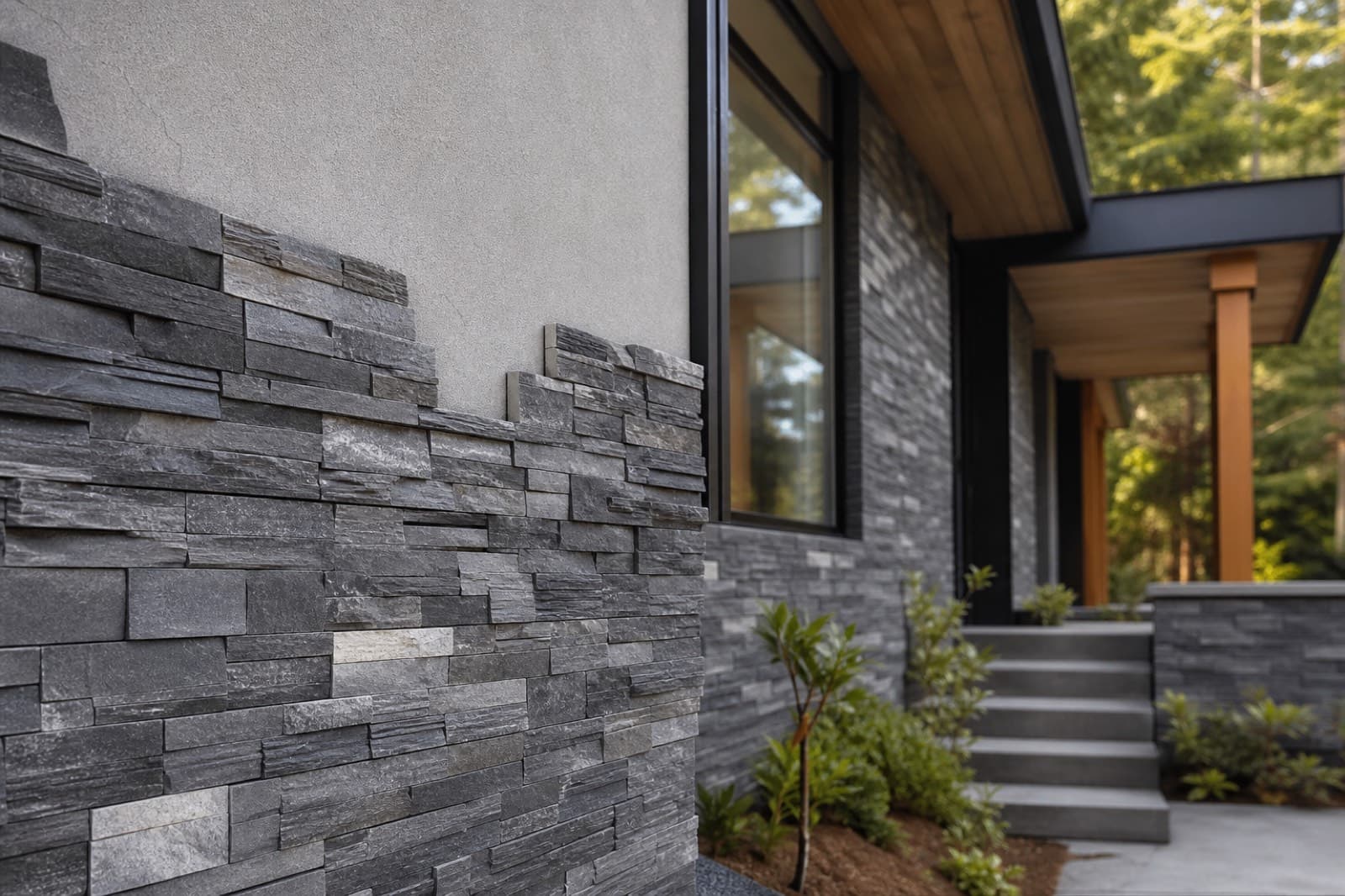
Stone veneer is one of the highest-impact upgrades you can make to a home's exterior, and one of the most commonly botched. The stone itself is the easy part. What separates an install that lasts from one that quietly rots the wall behind it is the part nobody sees: the drainage layer between the stone and the structure. In a climate as wet as the North Shore and the rest of Metro Vancouver, getting that layer right isn't optional. Here's what has to be there.
Veneer is not waterproof
Here's the key thing to understand: stone veneer, whether natural or manufactured, is not a waterproof skin. Water gets behind it. It always does, through the mortar joints, around penetrations, driven by wind. That's expected, and a properly built wall is designed to handle it.
The problem starts when the wall behind the veneer has no way to let that water drain and dry. The moisture gets trapped against the sheathing, and in our climate it doesn't get many chances to dry out. Trapped moisture rots wood sheathing and framing, and by the time it shows up inside, the damage is extensive and expensive.
What has to go behind the stone
A correctly built veneer wall is a layered system, installed from the structure outward:
- A weather-resistant barrier (often two layers) over the sheathing
- A drainage gap or drainage mat so water can run down and out
- Weep screed or flashing at the base to let that water escape
- Metal lath fastened through to the structure
- A scratch coat of mortar for the stone to bond to
- The stone itself, set in mortar
The detail most installers skip
The drainage gap and the weep screed at the bottom are where corners get cut. Slap the lath and stone straight onto a single layer of housewrap and it looks identical on day one. It's only two or three wet winters later, when the wall starts showing moisture damage, that the difference becomes obvious and costly.
On the North Shore especially, where the rain is heavier and the walls stay wet longer, this drainage detail is the whole ballgame. When we quote a veneer job, the prep behind the stone is a big part of what we're actually selling. The stone is what you see; the drainage is what makes it last.
Natural vs manufactured stone
Both natural and manufactured veneer can look excellent and both rely on the same drainage system behind them. Natural stone is quarried rock, heavier, pricier, with more depth and variation. Manufactured stone is cast concrete coloured to mimic stone, lighter and easier to handle, usually less expensive.
Neither is 'better' in the abstract. Natural stone wins on authenticity and longevity; manufactured wins on cost and weight. What matters is that the install behind either one is done properly. A premium natural stone on a wall with no drainage will fail before a manufactured stone done right.
Questions to ask before you hire
If you're getting veneer quotes, the answers to a few questions tell you a lot. Ask what goes behind the stone. You want to hear about a weather barrier, a drainage gap or mat, and weep screed at the base. If the answer is just 'lath and mortar,' keep looking.
Stone veneer done right is a decades-long upgrade that genuinely transforms a home and adds value. Done wrong, it's a slow-motion water problem hiding behind a nice facade. The difference is entirely in the wall you can't see, so make sure whoever you hire builds that part properly.