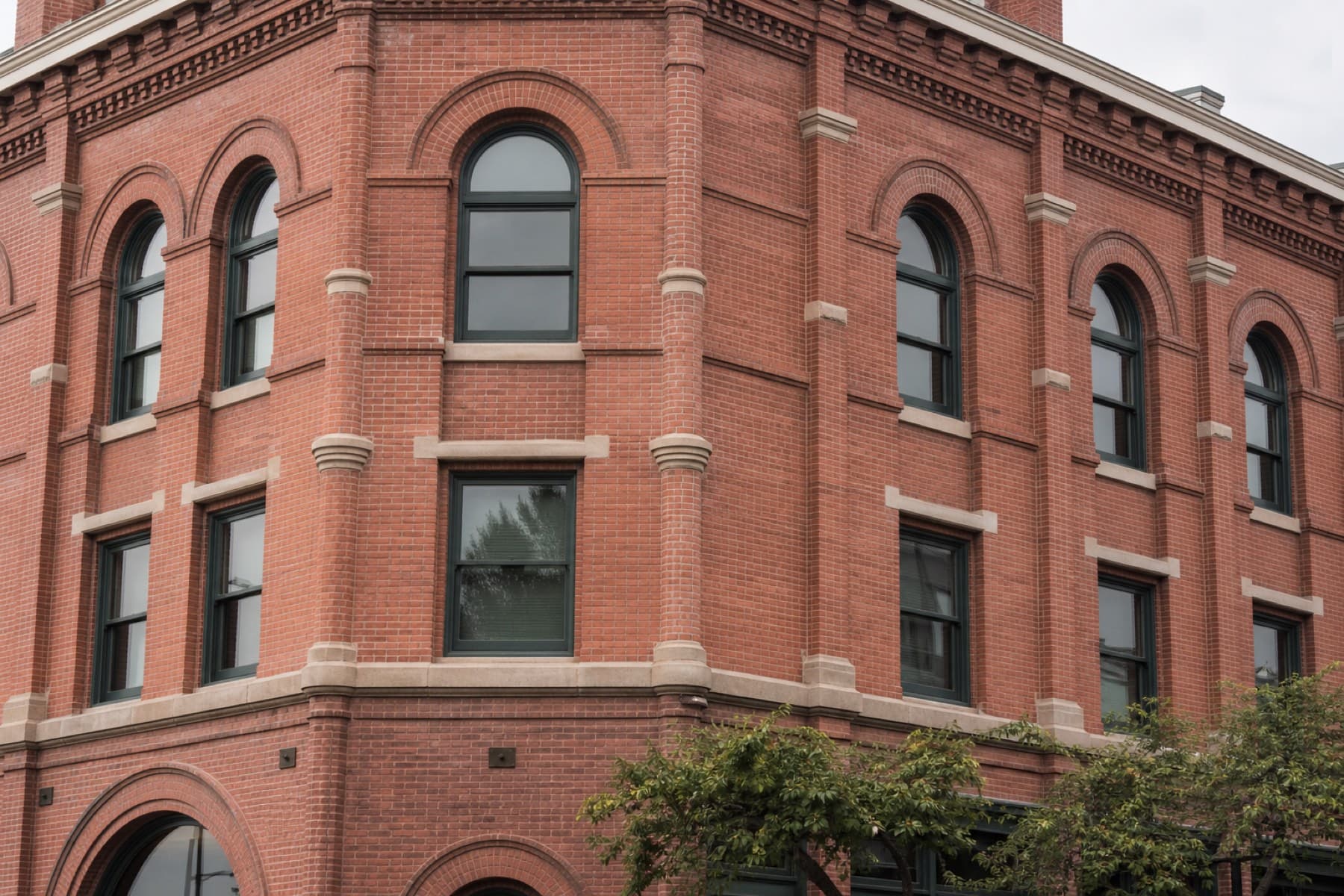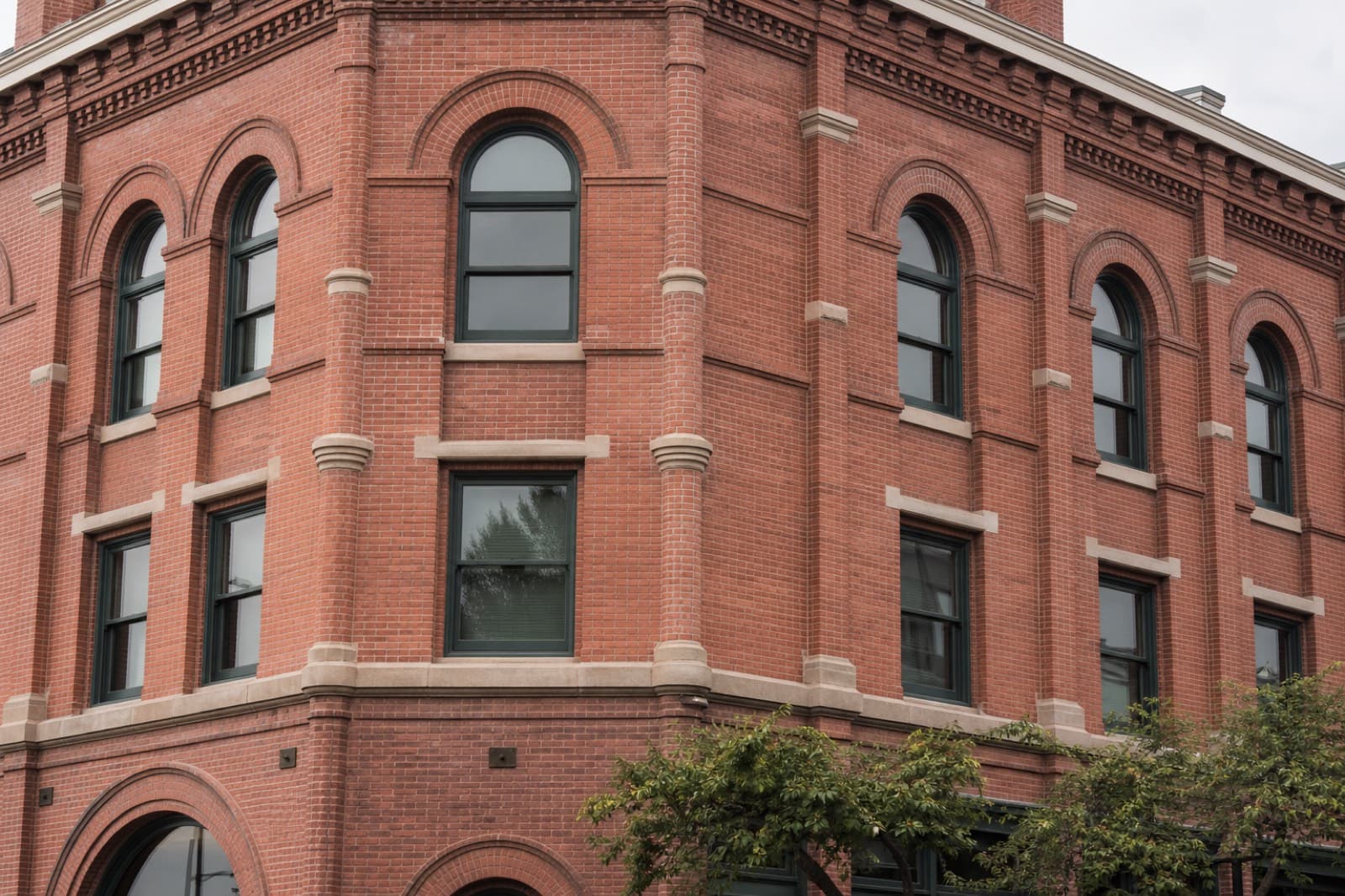
BC has more than a century of brick construction, and the buildings it produced are not all the same. Walk around Gastown, Queen's Park, or any older Burnaby neighbourhood and you're looking at buildings from three or four completely different eras of masonry, each built with different materials, different techniques, and different assumptions about how long it needs to last. The brick bungalow built in the 1950s and the thin-veneer townhome going up today are both described as 'brick buildings,' but they have almost nothing in common structurally. Knowing which type you have changes what you expect from it, how you repair it, and what goes wrong when you don't. This is a guide to the main categories, roughly in order of age, with a focus on what they mean for owners in the Lower Mainland.
The oldest brick in BC: pre-1900
The earliest brick buildings in British Columbia date to the 1860s and 1870s, concentrated in Victoria, New Westminster, and the area that would become Vancouver's Gastown. These buildings used a mix of locally produced brick and brick shipped from Britain and California, often arriving as ballast in trading vessels. The local clay brickmaking that emerged in the Fraser Valley relied on relatively simple kilns that produced brick with significant variation in density and hardness, sometimes batch to batch, sometimes brick to brick within the same wall.
This early brick is among the softest and most fragile masonry you'll encounter in the province. It's porous, irregular, and was always meant to be used with lime mortar of matching softness and flexibility. The whole system, brick and mortar together, managed moisture through absorption and controlled evaporation, not by blocking water entirely. Heritage buildings from this era that are still standing have typically survived because they were never 'upgraded' with hard modern Portland mortar. The ones that have been 'improved' often show the damage.
The surviving pre-1900 brick stock in the Lower Mainland is mostly commercial. Gastown's older buildings, parts of downtown New Westminster, and scattered commercial blocks in communities along the Fraser all date to this period. Residential brick from before 1900 is rare. Most homeowners who encounter truly soft, early brick find it in an old chimney, a foundation wall, or the remnants of a garden feature, not a full facade. But it's worth knowing what you have before anyone touches it.
The Edwardian boom: 1900 to 1920
The early 1900s brought a massive expansion of brick construction across BC, driven by the CPR, the resource economy, and rapid immigration. This is when neighbourhoods like Strathcona in Vancouver, Queen's Park in New Westminster, and significant portions of Victoria received their character homes. Most of the heritage brick residential stock that exists today in the Lower Mainland was laid between roughly 1900 and 1920.
Brick from this era was made in proper industrial kilns with better temperature control than the earlier period. It's more consistent than pre-1900 brick, but still generally softer and more porous than what came after 1950. The standard for residential construction was a solid double-wythe or triple-wythe brick wall, meaning two or three courses of brick thick, with the inner courses forming the interior wall surface. There was no wood frame. The brick was the structure, carrying the floors, the roof, and everything else.
Lime mortar remained standard through most of this period, though some contractors were beginning to experiment with early Portland cement blends by the 1910s. Homes built before roughly 1915 almost always have straight lime mortar throughout. After that the picture gets more variable, and testing what's actually in the joints matters before you specify a replacement mix.
The defining challenge for repair work on this generation of buildings is the combination of soft brick and old lime mortar in an extremely well-built structural wall. Get the mortar right and these buildings last indefinitely. Repoint them with hard Portland mortar and you transfer stress into the brick faces, which then spall and fail. The mortar becomes harder than the brick, and the brick becomes the sacrificial layer. Queen's Park in New Westminster is full of examples of both outcomes sitting on the same block.
The interwar years: 1920s to early 1940s
The interwar decades brought a gradual shift in BC brick construction. Brick continued to be used heavily, but the industry was changing. Kiln technology improved, producing harder and more consistent brick. Portland cement became dominant in mortar mixes, initially blended with lime and then increasingly used in higher proportions. The materials across the board got harder as the century advanced.
Architecturally, this was the period of the Vancouver bungalow, craftsman-influenced homes, and early modern commercial construction. Solid brick walls were still common for higher-end residential construction and for commercial buildings, but the early concept of a brick veneer on a backup structure, a single-wythe of brick as cladding rather than structure, began appearing in less expensive residential work during this period.
The interwar brick you'll encounter in older parts of Burnaby, Coquitlam, and Vancouver is typically harder than pre-1920 brick but softer than post-war material. The mortar is often a lime-Portland blend. The right approach for repointing depends on what's actually in the joints: if the existing mortar is a soft blend, matching it is the only correct call. If it's already been repointed with harder material at some point, you need to assess how the brick itself has responded before specifying anything new.
Post-war solid brick: 1940s to early 1960s
The post-war housing boom produced a large amount of solid brick construction in Metro Vancouver's suburbs. Burnaby, Port Coquitlam, and parts of Surrey have entire streets of homes from this era, modest but well-built houses with load-bearing brick walls. These weren't heritage construction. They were solid, practical buildings constructed when brick was still cost-competitive with wood frame for single-family residential work and the skilled labour to build it was widely available.
Post-war brick is considerably harder than pre-war material. The kilns were more controlled, the brick more consistent, and Portland mortar was by then the unambiguous standard. These walls are generally in better condition than their older counterparts because the harder materials hold up better in Lower Mainland weather cycles. They're also old enough now, 60 to 80 years, to need repointing in many cases, but they don't require the heritage-sensitive lime work that older buildings do.
The main thing that distinguishes post-war solid brick from older buildings isn't the brick itself, it's the fact that it was often built quickly and to a budget. The mortar work and detailing aren't always as careful as on an Edwardian home. Drainage at the base of the wall and around windows was sometimes an afterthought, and decades of grade changes, landscaping, and gutter neglect have left some of these buildings dealing with chronic moisture at the foundation line.
One detail worth knowing: post-war solid brick homes in BC sometimes have brick on all four sides and sometimes only on the front facade with wood siding elsewhere. The front-only brick houses are still solid brick at the front, not a veneer, but the other walls need to be assessed separately. It's not uncommon to find one type of problem on the brick face and a completely different situation at the sides.
The brick veneer shift: 1960s to 1990s
This is where the biggest misunderstanding about brick buildings sits. Starting in the 1960s and accelerating through the 1970s and 1980s, new residential construction shifted almost entirely from solid brick to wood-frame construction with a single-wythe brick veneer on the exterior. The brick went from being the structure to being the cladding.
In a brick veneer wall, a wood or steel frame carries all the structural loads. The brick hangs in front of it, attached to the frame with metal ties embedded in the mortar joints at regular intervals. There's usually a small air cavity between the brick and the frame, and the frame is sheathed and wrapped in a weather-resistive barrier behind that. It's a layered drainage system in theory. In practice, the quality of the original installation varies enormously.
The failure modes are completely different from a solid brick wall. A solid brick wall fails when the masonry itself fails. A veneer wall can fail in the masonry, in the tie system, or in the wall behind the brick, where water that gets through the veneer may be quietly rotting the framing over years without anything being obviously wrong from outside. When you tap on veneer brick and it sounds hollow in patches, the ties may have failed and those sections are no longer properly attached to the structure behind them. That's a different problem than failed mortar.
Large diagonal cracks running across several courses in a veneer wall usually follow structural movement in the wood frame underneath, not masonry failure on its own. And cracks that run along mortar bed joints for long horizontal stretches are often evidence of differential settlement or thermal movement that the tie system wasn't designed to handle.
The 1970s and 1980s produced brick veneer of wildly varying quality. Some of it is excellent and holding up well. Some of it was installed without adequate cavity drainage and has been managing a slow-motion moisture problem since roughly the mid-1990s when the buildings were new enough to have been considered fine but old enough for the hidden damage to accumulate. The age of the building and the climate it's in should always prompt a closer look at what's happening behind the brick.
Modern thin veneer and beyond: 1990s to now
Contemporary brick construction in BC splits into a few different categories depending on the building type. On mid-rise residential and commercial projects, full brick veneer on a concrete or steel structure is still used and often done to a high technical standard with engineered drainage and tie systems. This is where traditional masonry remains a serious cladding choice for larger buildings.
For single-family and low-rise residential work, thin brick panels and manufactured stone have largely replaced traditional brick in new construction. Thin brick is slices of real brick or brick-like material, often less than an inch thick, applied to a substrate rather than laid in courses. Manufactured stone is cast concrete coloured and textured to mimic stone or brick, also applied as a surface treatment. Neither is structural and neither is inherently waterproof.
Both thin brick and manufactured stone depend entirely on the wall system behind them. The drainage layer, the weather-resistive barrier, and the weep details at the base of the wall are the things that determine whether the installation works long-term. A lot of thin veneer from the late 1990s and early 2000s was installed without adequate drainage, and those walls are now the source of significant moisture problems in aging condos and townhomes across Metro Vancouver. The cladding looks fine. The framing behind it sometimes doesn't.
Clayburn brick and the history of local production
No account of brick in BC is complete without mentioning Clayburn. The Clayburn Company, established in 1905 near Abbotsford, was for decades the most significant brick manufacturer in the province. Clayburn brick was used across the Lower Mainland and into the interior, and it's a reasonable assumption that a large share of the pre-1950 brick buildings still standing in Metro Vancouver were built with Clayburn product.
Clayburn Village, still standing near Abbotsford, is one of the most intact early industrial communities in BC. The company built housing for its workers using the same brick it manufactured commercially, and the village survives today as a heritage site. Early Clayburn brick has a distinctive reddish-orange tone and texture that experienced masons can often identify on sight. It's also relatively soft by modern standards, which matters for any repair work on buildings where it was used.
Other significant sources for BC's older brick include shipments from England and the eastern US in the pre-1900 period, often arriving as cargo ballast, and from manufacturers in the Okanagan, where clay deposits supported a small regional industry through the early and mid-20th century. By roughly 1960, brick manufacturing in BC had consolidated and the local character of the material diminished. Modern brick used in the region is typically sourced from Alberta or the Pacific Northwest, standardized in size and appearance in ways that make matching heritage material more difficult.
For restoration work on pre-1950 buildings in the Lower Mainland, sourcing reclaimed brick of the right era and origin is often the only way to make a repair disappear. Clayburn or period-matched brick from a salvage source looks right next to original material. Modern brick, even in the right colour, usually doesn't.
How to figure out which type you have
A few practical questions narrow it down quickly. Knowing the approximate age of the building is the most useful starting point: buildings predating 1920 are almost certainly solid brick with lime mortar. Buildings from 1920 to 1950 are probably solid brick with a lime-Portland blend. Buildings from 1950 to 1965 are often still solid brick but with harder modern materials. Buildings from roughly 1965 onward are almost certainly veneer construction, with the exceptions being higher-end homes and commercial buildings.
The tap test helps confirm veneer. Knock on the brick at several points across the wall. Solid brick sounds dense and dull throughout. Veneer has a slightly different sound, and sections where ties have failed sound noticeably hollow. This doesn't require a professional to do and it tells you a lot.
- Pre-1920 building: assume soft brick and straight lime mortar. Match it exactly or leave it alone.
- 1920 to 1950: test the existing mortar hardness before specifying anything. Probably a lime-Portland blend.
- 1950 to 1965, sounds solid: post-war solid brick. Standard repointing with an appropriate Portland mix. Check drainage at the base.
- Post-1965, sounds hollow in patches: brick veneer. Investigate tie integrity and condition of the frame behind, not just the mortar.
- 1990s condo or townhome with thin or cast veneer: the drainage system behind the cladding is the whole question. The surface condition is secondary.
Why it all comes back to water
BC's brick stock is genuinely varied, and that variety matters for how each type ages and what it needs. But the common thread across all of it is that failures almost always come from the same source: moisture getting into the wrong places and having no path out.
Pre-1900 soft brick fails when someone fills the joints with mortar that traps moisture rather than letting it move. Post-war solid brick fails when the grade has changed and the base of the wall stays wet. Veneer walls from the 1980s fail when the drainage cavity was built without a clear escape route for water at the bottom. Thin-veneer condos from the late 1990s fail when the housewrap was lapped wrong or the weep screed was left out.
Understanding what type of building you're dealing with tells you where to look for the moisture problem, which is the first step to addressing it correctly. The wrong fix on the wrong type of building doesn't just waste money. On a soft heritage wall it can actively accelerate the damage. Get the diagnosis right, and the repair usually follows.