If there's one part of a Burnaby home that fails before anything else, it's the chimney. It sits up there taking the full force of the weather, year after year, with nothing protecting it. And the Lower Mainland throws a particularly nasty combination at masonry: heavy rain, then just enough cold snaps to freeze the water that soaked in. That cycle is what tears chimneys apart. Here's what's actually happening up there, and how to catch it before a small fix turns into a full rebuild.
Rain gets in, then freezes
Brick and mortar are porous. They drink up water like a sponge, which is fine until the temperature drops. When water inside the masonry freezes, it expands. That expansion pushes the face of the brick off in flakes, what we call spalling, and it widens every crack in the mortar.
We don't get the deep freezes that the Prairies do, but we get something almost worse for masonry: dozens of small freeze-thaw cycles every winter. The brick soaks up rain on a wet Tuesday, freezes Wednesday night, thaws Thursday, soaks up more rain Friday. Repeat that 40 times a winter for 30 years and even good brickwork starts to break down.
The crown is usually the first thing to go
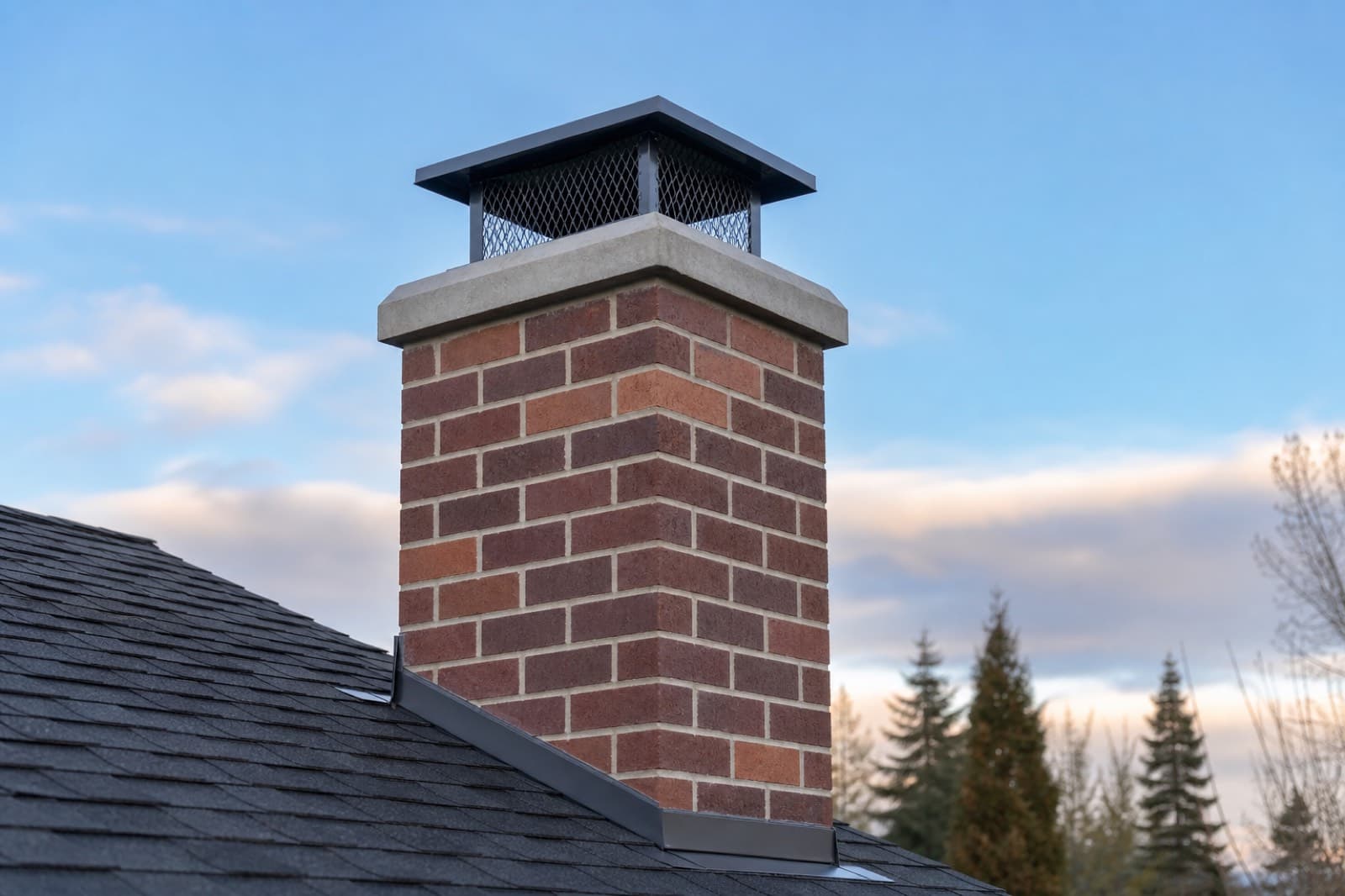
The crown is the concrete cap on the very top of the chimney. Its whole job is to shed water away from the masonry below. The problem is that a lot of crowns were poured thin and flat, with no slope and no overhang, so water sits on top instead of running off.
Once the crown cracks, and they all crack eventually, water pours straight down into the chimney structure. From there it works through the mortar joints and into the brick. A cracked crown is cheap to repair or replace. A cracked crown ignored for five years is how you end up needing the top half of the chimney rebuilt.
Warning signs you can spot from the ground
You don't need to climb on the roof to catch most chimney problems. A few things are visible from the yard or the attic:
- Bits of brick or mortar showing up in the gutters or on the roof
- White, chalky staining on the brick (efflorescence, a sign water is moving through it)
- A chimney that looks like it's leaning even slightly
- Water stains on the ceiling or wall near where the chimney passes through
- Daylight or gaps visible in the mortar joints
Why the wrong fix makes it worse
We get called out to a lot of chimneys that someone already 'fixed.' The most common mistake is smearing modern sealant or hard Portland mortar over failing joints. On a newer chimney that might buy time. On an older one it traps moisture inside the brick and speeds up the spalling.
The other common one is fixing the leak in the wrong place. Most chimney leaks come from the crown, the cap, or the flashing where the chimney meets the roof, not from the brick face itself. Sealing the brick when the real problem is the flashing just hides the leak while the water keeps coming in.
Repair or rebuild?
It comes down to how far the damage has spread. If the mortar is failing but the brick is mostly sound, repointing plus a new crown and cap usually does it. If the brick itself is spalling badly or the structure has started to lean, the damaged section needs to come down and be rebuilt from where the masonry is still solid.
The honest answer is that catching it early almost always keeps you in repair territory. The homeowners who end up needing a rebuild are usually the ones who watched the brick crumble for a few years and hoped it would hold.